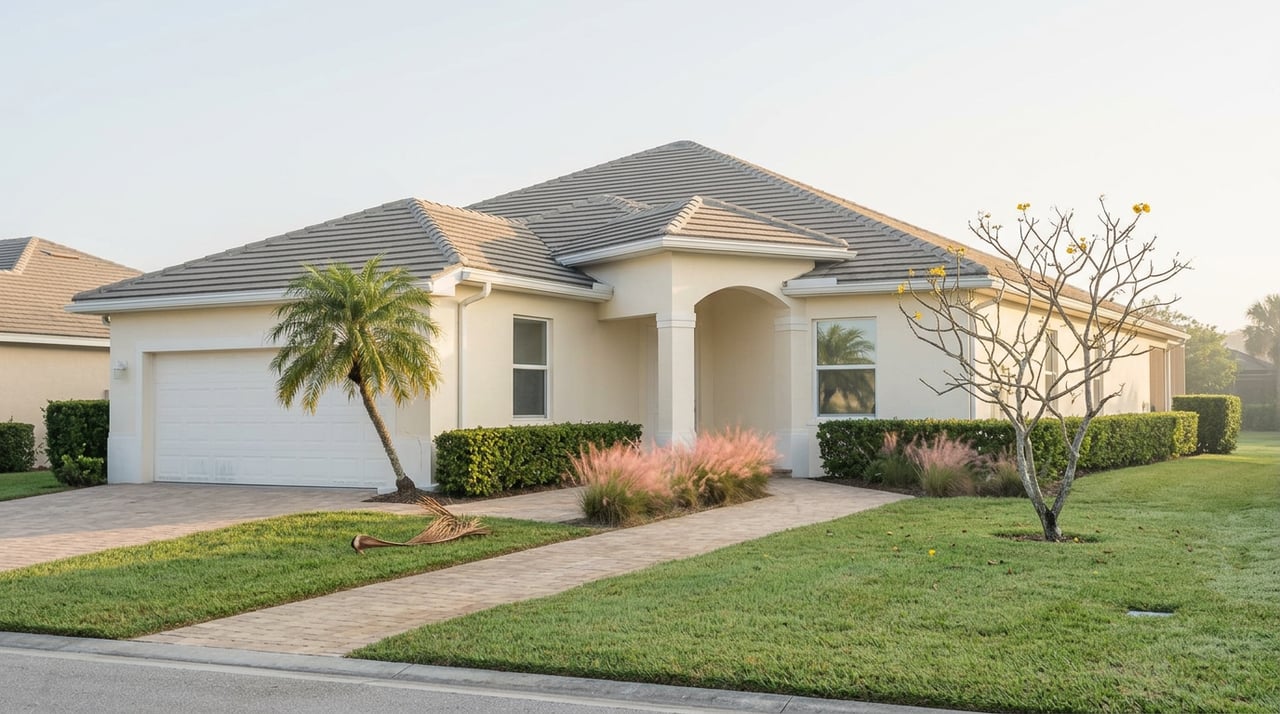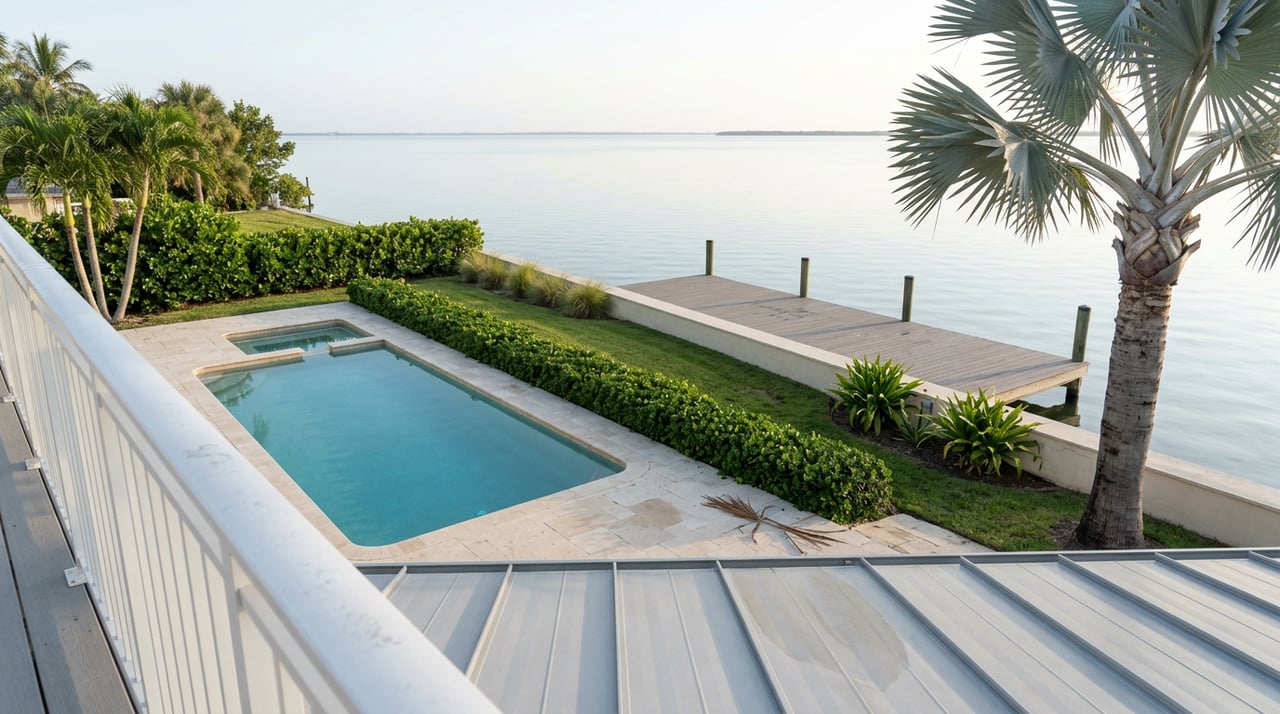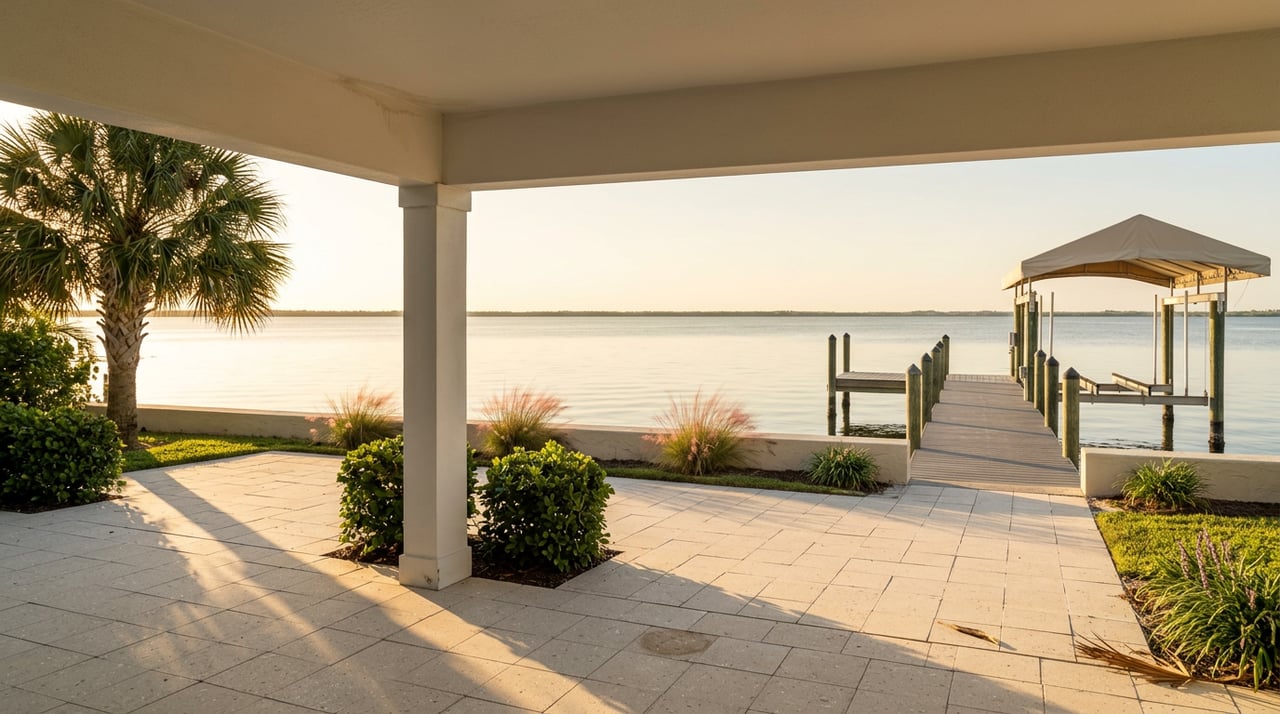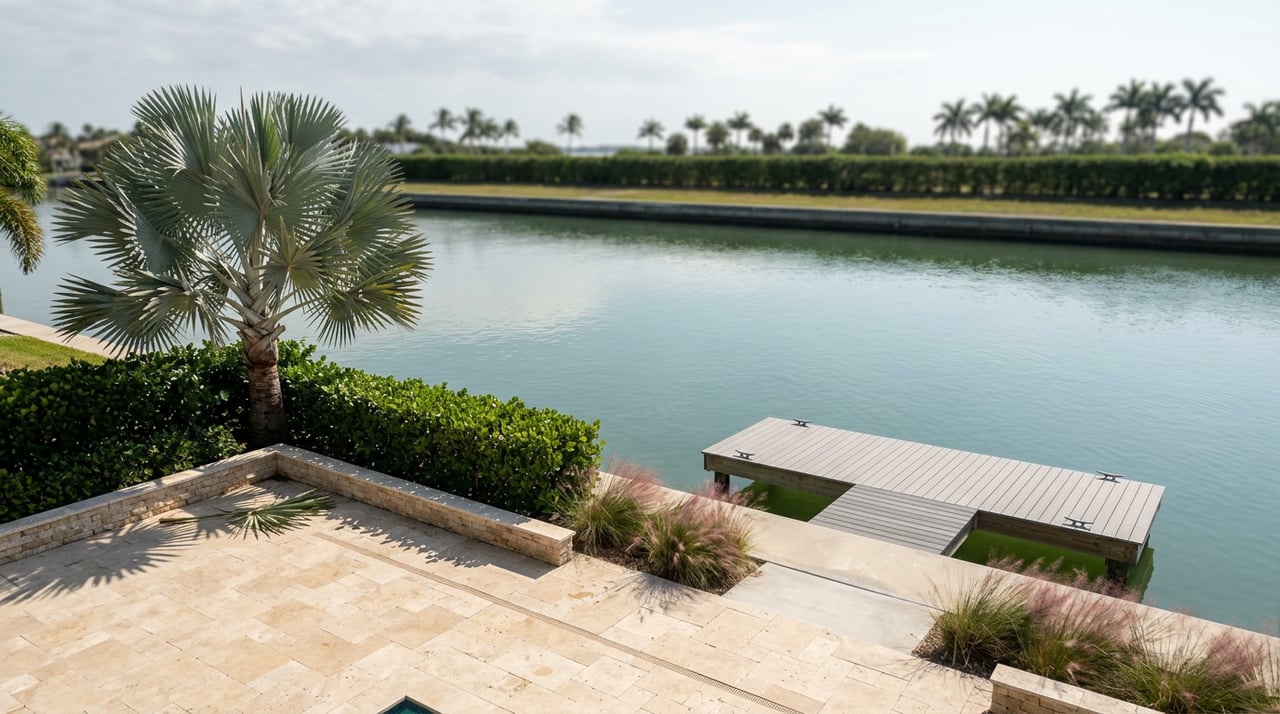
A buyer closes on a canal home in Rotonda West, pulls a residential dock permit from Charlotte County, waits through plan review, and builds precisely what the county approved. Then a letter arrives from the Rotonda West Association. The dock runs too long. Or the landscaping along the canal bank never should have gone in without a separate sign-off. The county permit was real. It just wasn't the only approval that mattered.
That gap catches people because Rotonda West doesn't work like most canal communities on the Gulf Coast, where a scattering of smaller subdivision HOAs each handle their own patch of waterfront. Rotonda West is one circular, deed-restricted community built around roughly 8,000 platted home sites on the Cape Haze peninsula, and a single association, the Rotonda West Association, holds authority over the entire canal system that winds through it. If you're buying on the water here, you're dealing with two separate governments that never merge into one checklist: Charlotte County, which cares whether your dock is structurally sound and environmentally compliant, and the Association, which cares whether it belongs on that particular strip of canal bank at all.
The Bank Isn't Really Yours
Most buyers assume that if their lot line runs to the water, the ground between their house and the canal is theirs to plant, pave, or build on as they see fit. In Rotonda West, it isn't, at least not entirely. The community's recorded deed restrictions give the Association the right to maintain the area between an owner's lot line and the water's edge of every canal in the subdivision. An owner can't add structures, fences, plantings, or other improvements to that strip without written approval first, and the restriction is specific that nothing can be added there that would get in the way of the Association's own maintenance responsibilities. Get it wrong, and the Association can remove the improvement at the owner's expense.
The same document caps how big a dock or landing platform can be: no more than 24 feet along the canal bank and 8 feet wide, including any part that extends over the water. Boats can't be anchored offshore when not in use, they have to be moored close to the bank so navigation isn't blocked, and a boat can't be stored anywhere on the property unless it's fully enclosed in a garage or sitting on the bank itself.
None of that shows up on a county permit application. It shows up in a governing document most buyers never open until after they've made an offer, if they open it at all.
What the Board Can't Do for You
Rotonda West's own governance rules make this harder to argue around than it might be elsewhere. According to the Rotonda West Association, the Board of Directors is required to enforce the deed restrictions consistently and uniformly, and it has no legal authority to waive or grant exceptions to them. Ten separate committees advise the Board, including one specifically for Canal Bank and Drainage and another for Residential Modification, both aimed at exactly this category of work. If a canal-front improvement doesn't fit within the restrictions, there isn't a side conversation that fixes it. The Association's Deed Restriction Clerk, Holly Carr, is the point of contact for questions on exactly this kind of project, reachable at 941-697-1780 or [email protected], and that's worth calling before a contractor breaks ground, not after.
The Association's own materials describe roughly 26 miles of canals running through the community today, though older governance documents put the figure closer to 30. Either way, it's a lot of shoreline for one association to hold approval rights over, and it explains why the rules read as tightly as they do.
What the County Actually Checks
Charlotte County's side of the process is a separate track entirely, built around structural safety and environmental review rather than neighborhood character. A residential dock permit requires signed and sealed engineering plans, may require sign-off from the Florida Department of Environmental Protection or the U.S. Army Corps of Engineers depending on the waterway, and needs a recorded Notice of Commencement for any project over $5,000. A residential seawall permit follows a similar path. Since August 2024, the county has also required a licensed electrical subcontractor on any marine permit that includes wiring, such as a boatlift motor, closing a gap that had let general contractors handle that work directly.
That review answers the question of whether a structure is safe and legal to build over the water. It doesn't answer whether the Association will let it stay there at the size and location the owner wants. A dock can pass every county inspection and still violate the deed restrictions, because the two processes are asking different questions.
| Charlotte County | Rotonda West Association | |
|---|---|---|
| What it reviews | Structural safety, flood and wind loads, environmental impact | Size, placement, and appearance on the canal bank |
| Governing document | Florida Building Code, county ordinance | Recorded deed restrictions |
| Who can grant an exception | County building official, in limited cases | No one. The Board can't waive the restrictions |
| What happens if you skip it | Stop-work order, failed inspection | Association can order removal at owner's expense |
What to Ask Before You Waive a Contingency
If a canal-front home in Rotonda West is on your list, a few questions during due diligence will tell you more than a walk-through ever will.
- Ask the seller or listing agent for any Association approval on file for the existing dock, seawall, or canal-bank landscaping. If nothing exists in writing, that's worth flagging, not assuming away.
- Measure the existing dock against the 24-foot-by-8-foot cap. A larger dock may predate the current restrictions, and older improvements aren't automatically guaranteed to carry forward under the same terms.
- Pull the property's permit history through Charlotte County's own records to confirm the dock or seawall was permitted and finaled, not just built.
- If you're planning new work after closing, budget time for both approval tracks running in parallel, not one after the other. County marine permits alone can take weeks depending on the scope, and the Association's own review adds a second timeline on top of that.
- Call the Deed Restriction Clerk before you sign off on a home inspection contingency. A five-minute conversation can confirm whether a specific improvement was ever approved.
None of this makes Rotonda West a harder place to own waterfront. The canal system is exactly what draws people there, and having one association hold the whole shoreline to a consistent standard is part of why the community has kept its character over the decades. It just means the county's stamp of approval is the first gate, not the last one.
A Few Common Questions
Does every home in Rotonda West sit on Association-controlled canal bank? No. The restriction applies specifically to lots along the canal system. Interior lots and golf-course-facing lots follow the same general deed restrictions for architectural review but aren't subject to the canal-bank maintenance and dock-size provisions.
Can an older dock that's larger than 24 by 8 feet stay as-is? That depends on when it was built and whether it received approval under the terms in place at the time. This is exactly the kind of detail worth confirming with the Association directly rather than assuming from the dock's current size.
Who do I contact if I want to add a boat lift or extend a seawall? Start with Charlotte County's permitting office for the structural side and the Rotonda West Association's Deed Restriction Clerk for the community approval side. Getting both answers before signing a contract with a marine contractor saves time later.
Buying on the water in Rotonda West means dealing with two approval systems that don't automatically talk to each other, and the difference between a smooth closing and a compliance headache usually comes down to who asked the right questions early. That's the kind of groundwork The Real Estate Captains walks through with every waterfront buyer before an offer goes in, not after. If a canal-front home in Rotonda West is on your list, give us a call and we'll help you sort out what the dock actually comes with.